
Easy Mystery Character Nonogram: Can You Guess the Picture?
Easy • Color • 25×20 • Classic Character
A familiar face is hiding inside this free printable nonogram puzzle, but its identity is staying a secret for now!
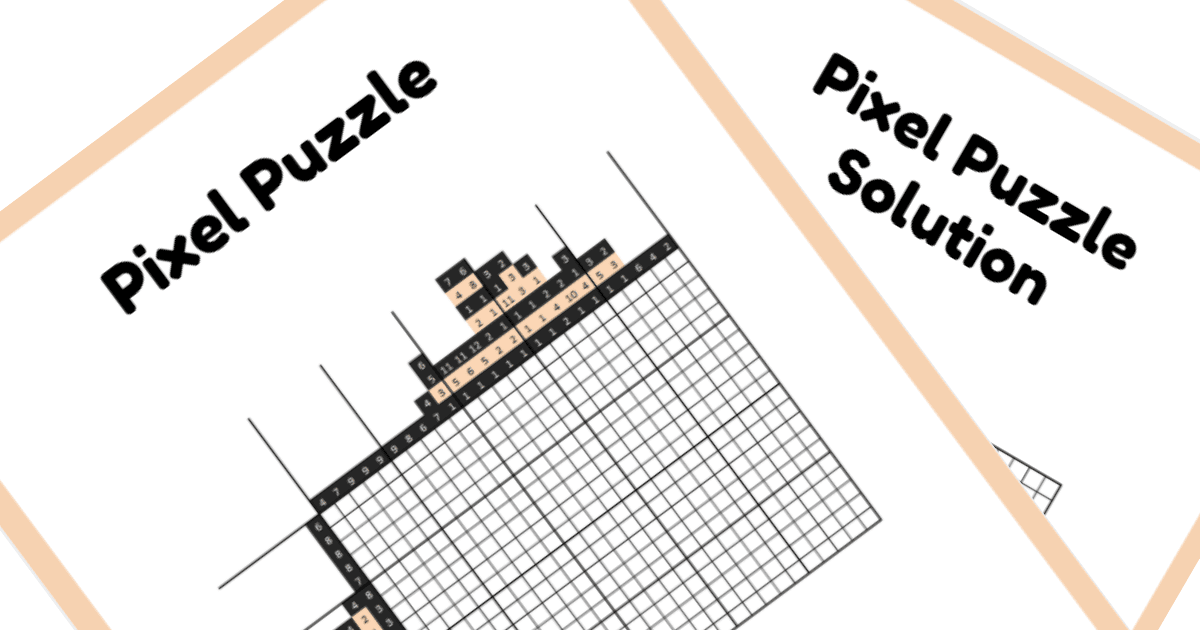
This easy 25×20 picture logic puzzle invites you to uncover a mystery character using numbered clues, careful deductions, and a little curiosity. As you fill in the correct squares, a colorful pixel art image gradually emerges. See if you can recognize the character before the final square is complete.
The compact grid makes this puzzle a great choice for beginners, casual Picross fans, and anyone who enjoys a little mystery with their logic games. You don’t need to know anything about the character beforehand. All you need is a pencil, some patience, and a willingness to follow the clues.
Nonograms are also known as Picross, Griddlers, Picture Cross Puzzles, and Japanese Crosswords. Each row and column contains numerical clues that indicate how groups of filled squares should be arranged. By combining information from both directions, you can reconstruct the hidden image one step at a time.
Will you recognize the mystery character early, or will the completed grid be your first clear look at the answer?
Looking for more hidden character puzzles? Explore the complete Classic Character Nonogram collection for more free printable nonogram puzzles featuring familiar characters.
Download Your Free Printable Nonogram Puzzle
Your free download includes the puzzle and a separate answer key, so you can enjoy the challenge without accidentally spoiling the surprise.
Included in your download:
✅ Free printable color nonogram PDF
✅ Easy 25×20 puzzle grid
✅ Full-color answer key
✅ Beginner-friendly picture logic challenge
Print the puzzle and solve it with a pencil, add it to your favorite collection of printable brain teasers, or open the PDF in a compatible annotation app.
For the best mystery-solving experience, start with the puzzle itself and save the answer key for later. You might be surprised by how early you can identify the character from the emerging shapes!
About This Puzzle: A Familiar Face Hidden in Pixel Art
Some pictures are easy to recognize at a glance. This one asks you to work for the answer.
This 25×20 easy nonogram begins with an empty grid and a collection of numerical clues. There is no finished picture to study and no character name to give away the surprise. Instead, you’ll need to use logic to uncover the artwork for yourself.
As you solve individual rows and columns, small patches of color begin to appear. At first, they might not seem particularly meaningful. A few filled squares here and there may look like disconnected shapes, but each deduction brings you closer to understanding the bigger picture.
Gradually, those separate sections begin to connect. An outline starts to emerge, the proportions become clearer, and the mystery image becomes easier to interpret.
You may find yourself forming a guess halfway through the puzzle. Or you might prefer to finish the entire grid before deciding what you’ve uncovered. Either way, the anticipation is part of the fun.
The easy difficulty level keeps the challenge approachable, making this a good option for newer nonogram solvers and experienced puzzle fans who want a relaxing activity. The 25×20 layout offers enough room for the image to develop while remaining manageable for a short puzzle session.
Every clue provides another piece of information. The trick is to combine those pieces without jumping to conclusions too soon.
Can you identify the mystery character before the final square is filled? Try solving the grid without looking at the answer key, and see whether your first guess turns out to be correct.
Puzzle Details
| Puzzle Type | Nonogram / Picross / Picture Logic Puzzle |
| Theme | Classic Character |
| Difficulty | Easy |
| B&W/Color | Color |
| Grid Size | 25×20 |
| Best For | Adults, Teens, and Older Kids |
| Format | Printable PDF |
The 25×20 grid provides a manageable introduction to picture logic while leaving enough space for the hidden image to take shape.
If you’re new to nonograms, this is a useful size for practicing the basic rules without committing to a very large puzzle. If you’re already familiar with Picross, it offers a quick, satisfying challenge with a mystery reveal at the end.
Watch the Hidden Picture Take Shape
One of the most enjoyable parts of solving a nonogram is seeing an image emerge from what initially looks like a collection of unrelated numbers.
You start with no clear picture to follow. Instead, each row and column gives you a small amount of information about where filled squares belong. As you make deductions, the empty grid gradually transforms into pixel art.
Sometimes the first recognizable feature appears surprisingly early. Other times, you may need to solve several intersecting lines before the picture begins to make sense.
That gradual discovery makes hidden-character puzzles especially satisfying. You aren’t simply completing a drawing; you’re figuring out what the drawing represents.
With this easy puzzle, you can take your time, enjoy the process, and see whether you can solve the mystery before checking the solution.
Tip: If you think you know the answer halfway through, keep solving anyway. Completing the remaining clues is part of the challenge!
Thoughtfully Designed for an Enjoyable Solve
At Small World Puzzles, the goal is to create printable logic puzzles that are enjoyable from the first clue to the final image.
Each nonogram is individually designed around its intended picture. The numerical clues are checked against the completed grid, and the puzzle is solved and tested before publication to verify that it has a unique solution.
For a hidden-character puzzle, the finished image needs to be recognizable, but the solving process should also be rewarding. The clues should give you enough information to make progress without requiring you to guess what the picture is supposed to be.
This easy 25×20 nonogram is designed to offer an approachable challenge while preserving the surprise of discovering the hidden artwork.
Whether you print it for a quiet afternoon or solve it digitally during a break, the aim is simple: enjoy the logic, follow the clues, and let the mystery unfold.
What Makes This Nonogram Fun?
This printable combines a traditional logic challenge with the anticipation of uncovering a familiar picture.
- Easy difficulty: A welcoming starting point for newer nonogram solvers.
- 25×20 grid: A compact format that is straightforward to print and solve.
- Hidden character: Discover the identity of the picture instead of seeing it in advance.
- Color pixel art: Watch the image gradually develop as you fill the correct squares.
- Free printable PDF: Enjoy the puzzle on paper whenever you like.
- Digital-friendly format: Use a compatible PDF annotation app if you prefer solving on a tablet or computer.
- Answer key included: Check your completed grid when you’re ready.
- Screen-free entertainment: Enjoy a visual logic activity at home, on vacation, or during a quiet break.
Whether you’re a longtime Picross fan or trying a nonogram for the first time, the objective is the same: use the clues, trust your deductions, and discover what’s hiding in the grid.
How to Solve a Nonogram
A nonogram is a picture logic puzzle in which numbered clues tell you how many consecutive squares must be filled in each row and column.
The numbers beside a row describe its horizontal groups. The numbers above a column describe its vertical groups. When a clue contains more than one number, each number represents a separate group of filled squares, and at least one empty square must separate neighboring groups.
For example, a row with the clue 4 2 contains a group of four filled squares and another group of two filled squares, with at least one empty square between them.
The key is to use both directions together. A row may tell you which squares must be filled, while the clues for intersecting columns help you determine where the remaining groups belong.
As you solve more lines, the possible arrangements become increasingly limited. Eventually, the filled squares combine to reveal the hidden picture.
No drawing skills are needed. You simply use logic to determine which squares belong to the image.
Other Names for Nonograms
If you’re searching for more puzzles like this one, you may find them listed under several different names.
Common terms include:
- Picross puzzles
- Griddlers
- Picture Cross Puzzles
- Picture Logic Puzzles
- Japanese Crosswords
- Pixel picture puzzles
These names generally refer to the same style of puzzle: using numbered clues to uncover an image one square at a time.
Beginner Tips for Solving the 25×20 Grid
If this is one of your first nonograms, a few simple techniques can make the solving process easier.
1. Start with the biggest clues.
Look for rows or columns whose numbers account for most of the available squares. These often have fewer possible arrangements and can provide a useful starting point.
2. Work in both directions.
Don’t concentrate exclusively on rows or columns. Switch between horizontal and vertical clues whenever a deduction gives you new information.
3. Mark confirmed empty squares.
Knowing where a group cannot go is just as important as knowing where it must go. Marking empty squares can help separate groups and prevent mistakes.
4. Use logic rather than guessing.
You may begin to suspect what the hidden picture represents, but the numbered clues should determine where you fill the squares. Make each move because the information supports it.
5. Revisit difficult lines.
A row that seems impossible to solve may become easier after you complete a few intersecting columns. Return to earlier clues as the grid develops.
6. Save the answer key for the end.
The gradual reveal is part of the experience. Give yourself a chance to solve the puzzle before checking the finished picture.
You don’t need to solve every line in order. Work wherever the clues provide enough information, and let each new deduction help unlock another part of the grid.
Why Solve Printable Nonograms?
Printable nonograms are a convenient way to enjoy a logic challenge without needing a game console or a dedicated puzzle app. All you need is the puzzle, something to write with, and a little patience.
They make a fun addition to:
- Quiet evenings at home
- Weekend puzzle sessions
- Family activities
- Homeschool enrichment
- Classroom activities
- Travel and vacation downtime
- Rainy afternoons
- Screen-free breaks
- Personal puzzle collections
- Relaxing solo activities
Unlike a traditional word puzzle, a nonogram offers a visual reward at the end. Every correct deduction brings you closer to the completed image, making the final reveal part of the solving experience.
The combination of logic and discovery is what makes these puzzles so appealing. You start with a blank grid and finish with a picture you uncovered yourself.
Can You Solve the Mystery?
Before opening the answer key, see whether you can work out the identity of the hidden character.
Here are a few general clues to help you along without giving away the answer.
Hint #1: Look at the overall shape.
Rather than focusing on individual colored squares, step back and consider how the different sections might fit together.
Hint #2: Pay attention to the outline.
The outer shape of a character can sometimes be easier to recognize than the smaller details inside it.
Hint #3: Trust what you see emerging.
As more of the grid is completed, compare the proportions and arrangement of the shapes. You may begin to recognize something familiar.
These hints are intentionally broad, so the character remains a mystery until you choose to reveal the solution.
Can you name the character before you finish the entire 25×20 grid?
Frequently Asked Questions
A nonogram is a picture logic puzzle in which numbered clues indicate how many consecutive squares should be filled in each row and column. Solving the clues reveals a hidden image.
Yes. This puzzle is available as a free printable PDF, with a separate answer key for checking the completed image.
Nonogram and Picross are commonly used names for the same general type of picture logic puzzle. You may also see these puzzles called Griddlers, Picture Cross Puzzles, or Japanese Crosswords.
Yes. This puzzle is rated easy and is designed to be approachable for beginners and casual solvers. The numbered clues and solving tips in this article can help you get started.
Yes. The PDF can be solved using a compatible annotation app on a tablet, computer, or other device.
Yes. Each puzzle is individually designed, solved, and checked before publication. The clues are reviewed against the finished image to ensure the puzzle has a unique solution.
Did You Solve the Mystery?
⚠️ Spoiler Warning: The answer below reveals the hidden character.
🔍 Reveal the Character
🎭 Character: Mickey Mouse
Ready for another mystery? Explore more hidden-character nonograms from Small World Puzzles and see how many pictures you can identify before revealing their answers.
Collect them all! Every puzzle in our Classic Character Nonogram series reveals a different hidden character. See how many you can identify before checking the answers.
Discover More Classic Character Nonograms
- Classic Character Nonogram Puzzle #019
- Classic Character Nonogram Puzzle #020
- Classic Character Nonogram Puzzle #021
- Classic Character Nonogram Puzzle #022
Browse All Printable Nonogram Puzzles
More Free Printable Puzzles
Browse All Printable Puzzles
This printable is for personal and classroom use only. Not for commercial redistribution. | This puzzle is inspired by classic characters and is an unofficial fan-created printable. It is not affiliated with, sponsored by, or endorsed by The Walt Disney Company or any of its affiliates.